

Delegates Who Didn’t Ratify The Constitution Of The United States
After the 2024 General Election I created a small collection of illustrations with a specific theme - the founding fathers of the United States who didn’t sign the U.S. Constitution. I stumbled upon surprising reasons why some attendees of the Constitutional Convention refused to endorse the document that would shape our democratic republic.

Caleb Strong of Massachusetts favored a strong central government. He successfully moved that the House of Representatives should originate all money bills and sat on the drafting committee. Though he preferred a system that accorded the same rank and mode of election to both houses of Congress, he voted in favor of equal representation in the Senate and proportional in the House.
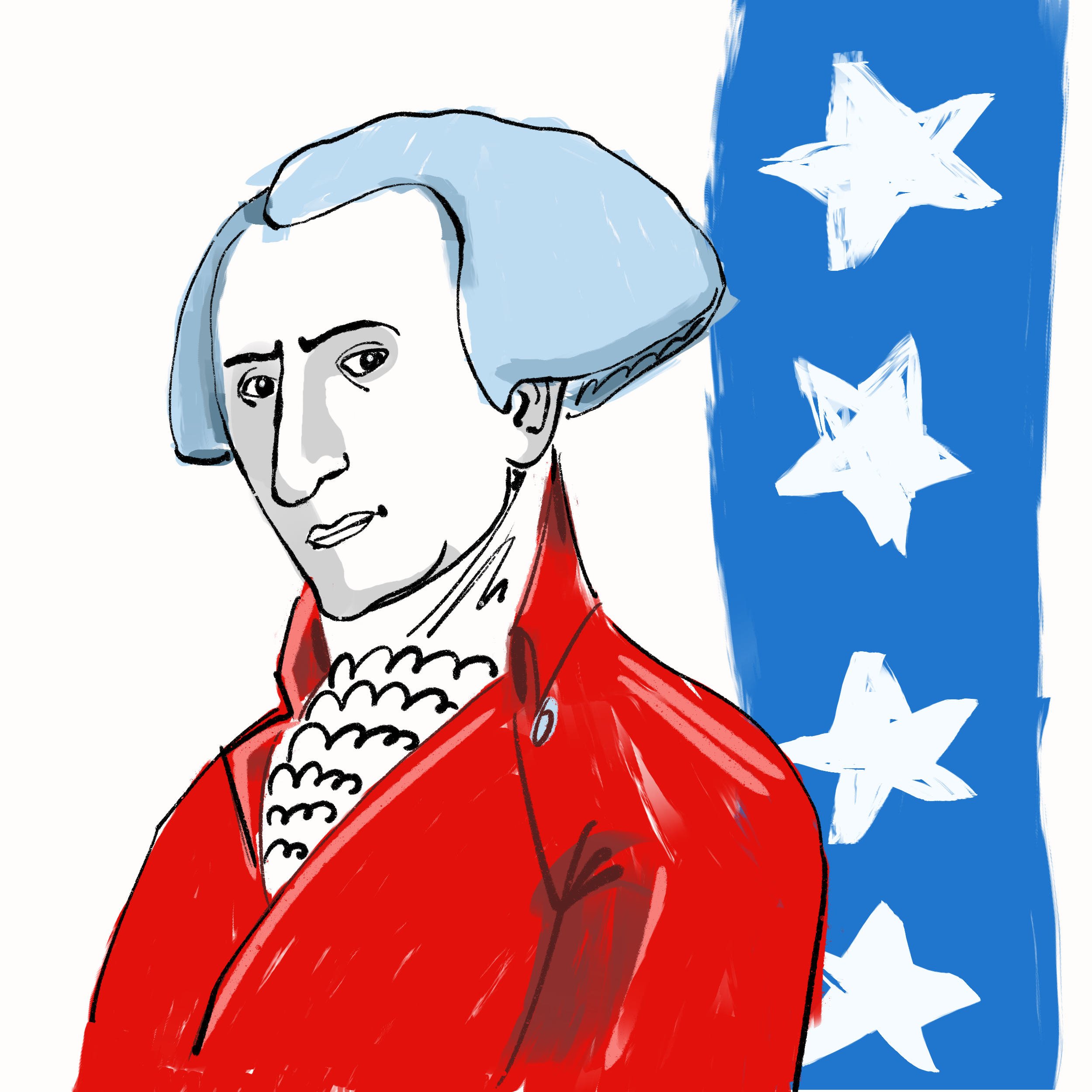
Elbridge Gerry of Massachusetts presided as chairman of the committee that produced the Great Compromise - US constitutional provisions that each state receives equal representation in the US Senate - but disliked the compromise itself. At first an advocate of a strong central government, Gerry ultimately rejected and refused to sign the Constitution because it lacked a bill of rights and because he deemed it a threat to republicanism which calls for the monarchy to be replaced by an elected head of state.

During the Constitutional Convention William Richardson Davie Of North Carolina favored plans for a strong central government. He was a member of the committee that considered the question of representation in Congress and swung the North Carolina delegation’s vote in favor of the Great Compromise. He favored election of senators and presidential electors by the legislature and insisted on counting slaves in determining representation. Though he left the convention on August 13, before its adjournment, Davie fought hard for the Constitution’s ratification.

Luther Martin Of Maryland attacked the proposed new form of government and continued to fight ratification of the Constitution through 1788. He lamented the ascension of the national government over the states and condemned what he saw as unequal representation in Congress. Martin opposed including slaves in determining representation and believed that the absence of a jury in the Supreme Court gravely endangered freedom. At the convention, Martin complained, the aggrandizement of particular states and individuals often had been pursued more avidly than the welfare of the country. The assumption of the term “federal” by those who favored a national government also irritated Martin.

William Houston Of Georgia, a zealous advocate of colonists’ rights, was among the first to counsel resistance to British aggression. When the Constitutional Convention convened in 1787, Houston presented his credentials as one of Georgia’s delegates. He stayed for only a short time, from June 1 until about July 23, but he was present during the debate on the representation question. He was for representation in the Senate based upon property holdings.

At Philadelphia in 1787 George Mason Of Virginia was one of the five most frequent speakers at the Constitutional Convention. He exerted great influence, but during the last 2 weeks of the convention he decided not to sign the document. Mason’s refusal prompts some surprise, especially since his name is so closely linked with constitutionalism. He explained his reasons at length, citing the absence of a declaration of rights as his primary concern. He then discussed the provisions of the Constitution point by point, beginning with the House of Representatives. The House he criticized as not truly representative of the nation, the Senate as too powerful. He also claimed that the power of the federal judiciary would destroy the state judiciaries, render justice unattainable, and enable the rich to oppress and ruin the poor. These fears led Mason to conclude that the new government was destined to either become a monarchy or fall into the hands of a corrupt, oppressive aristocracy.